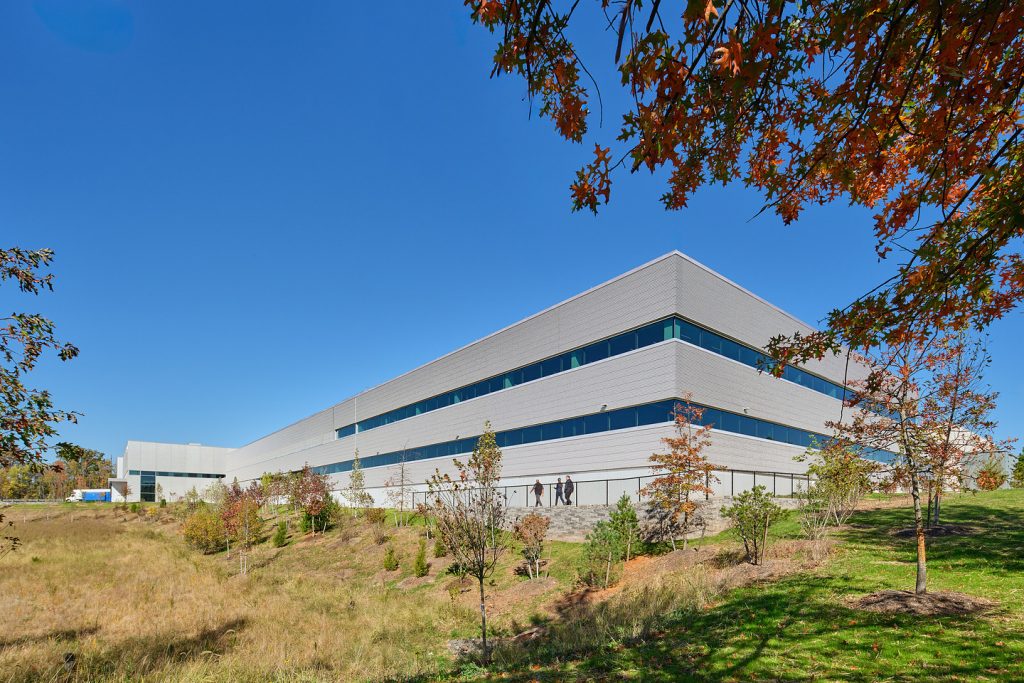
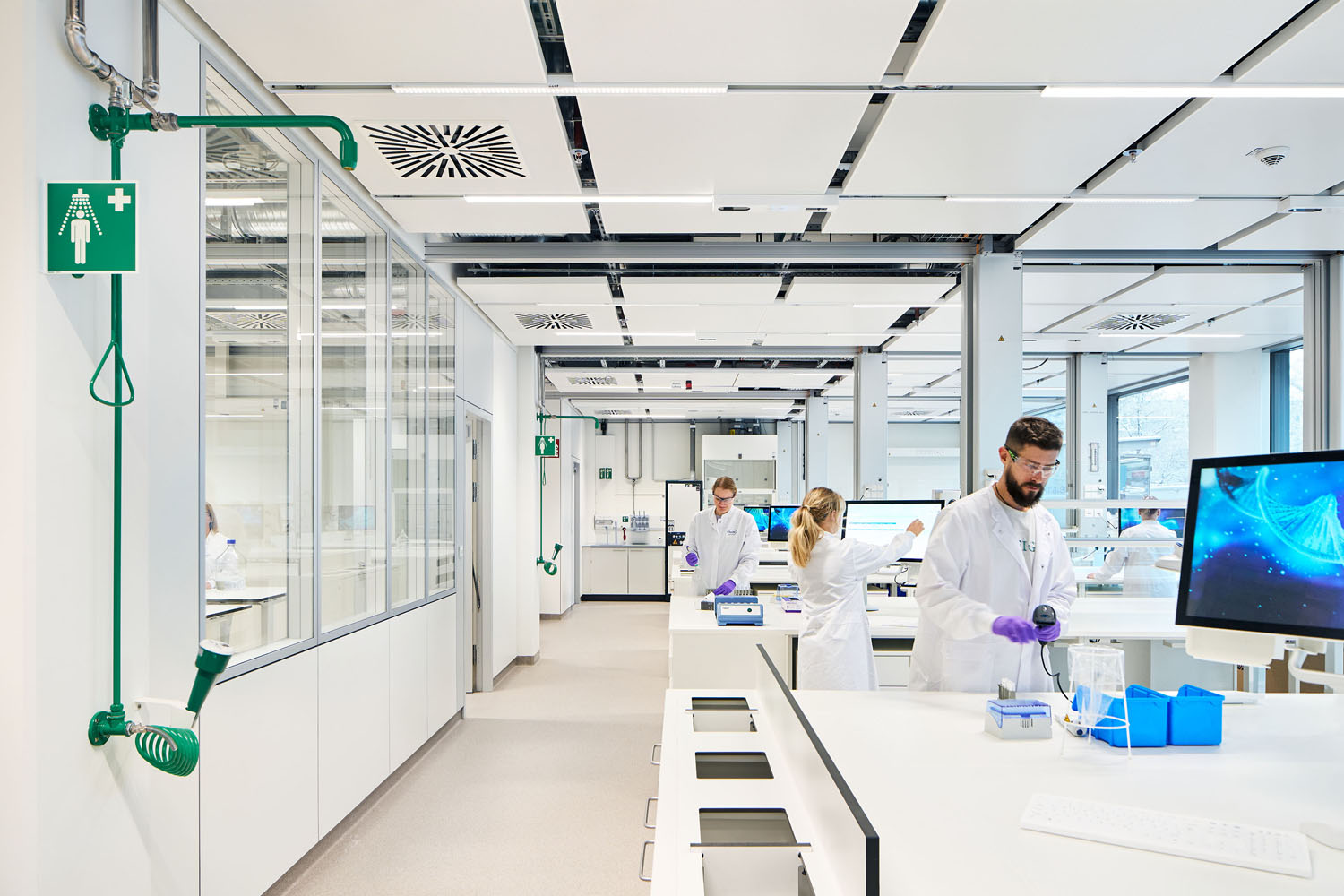
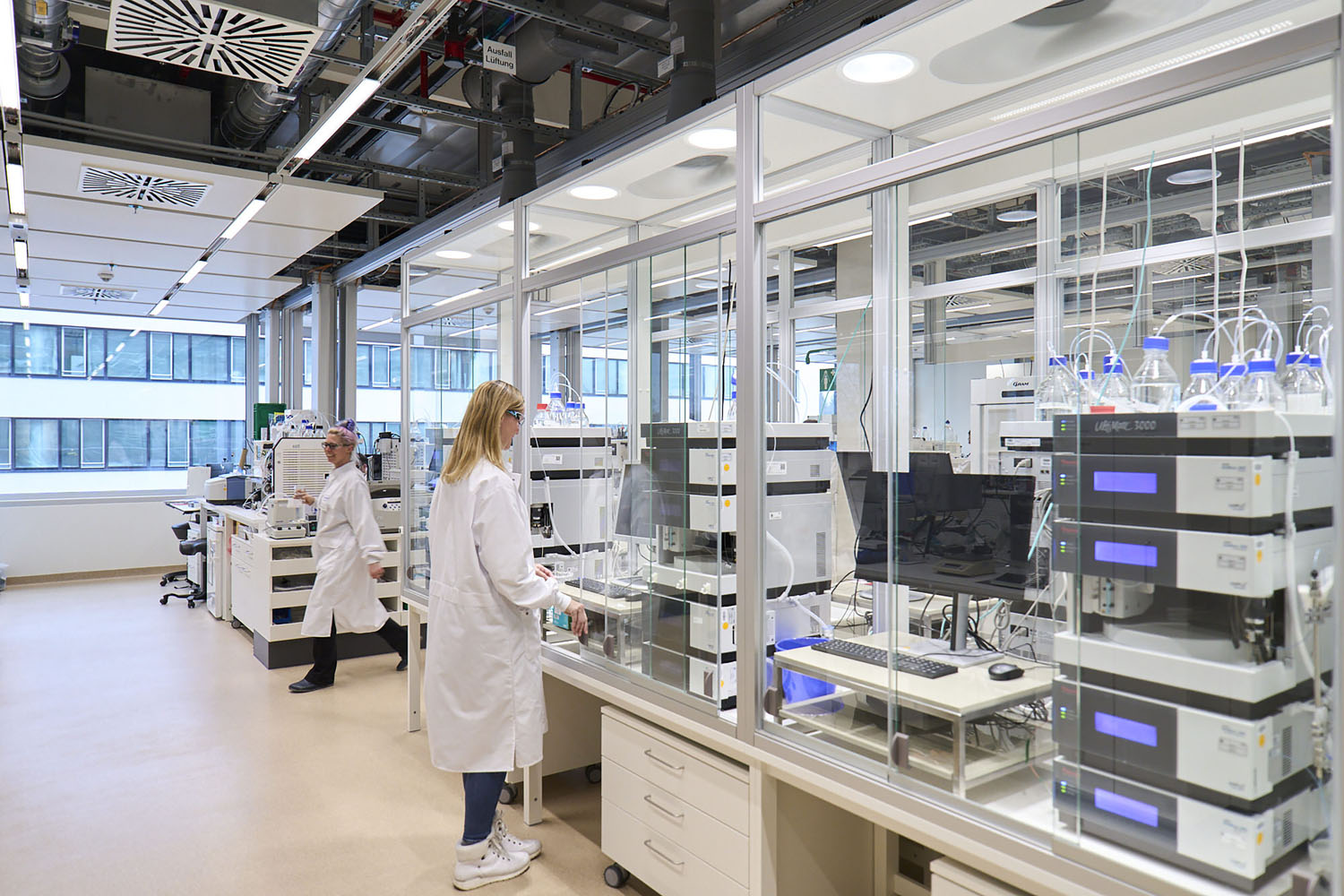
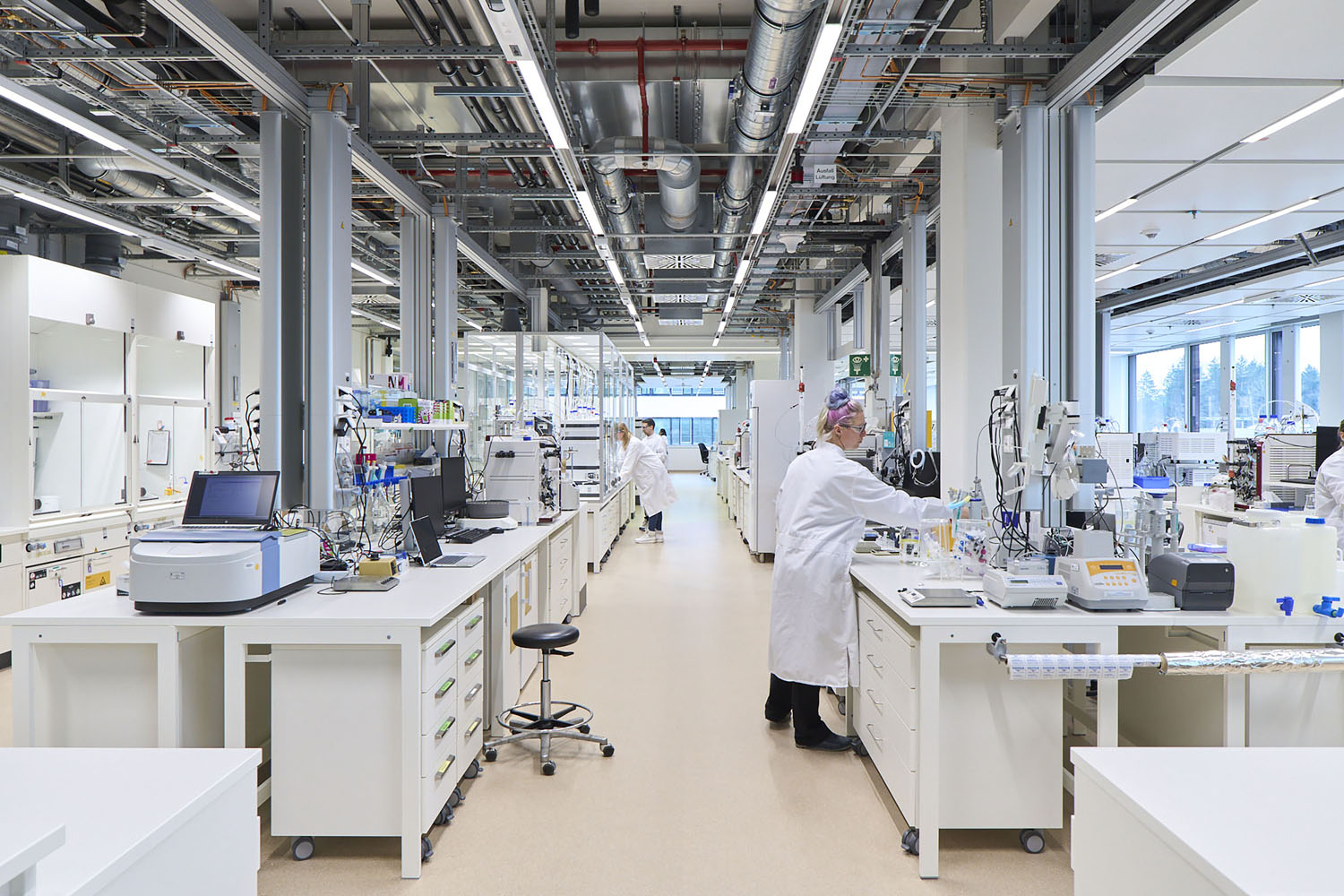
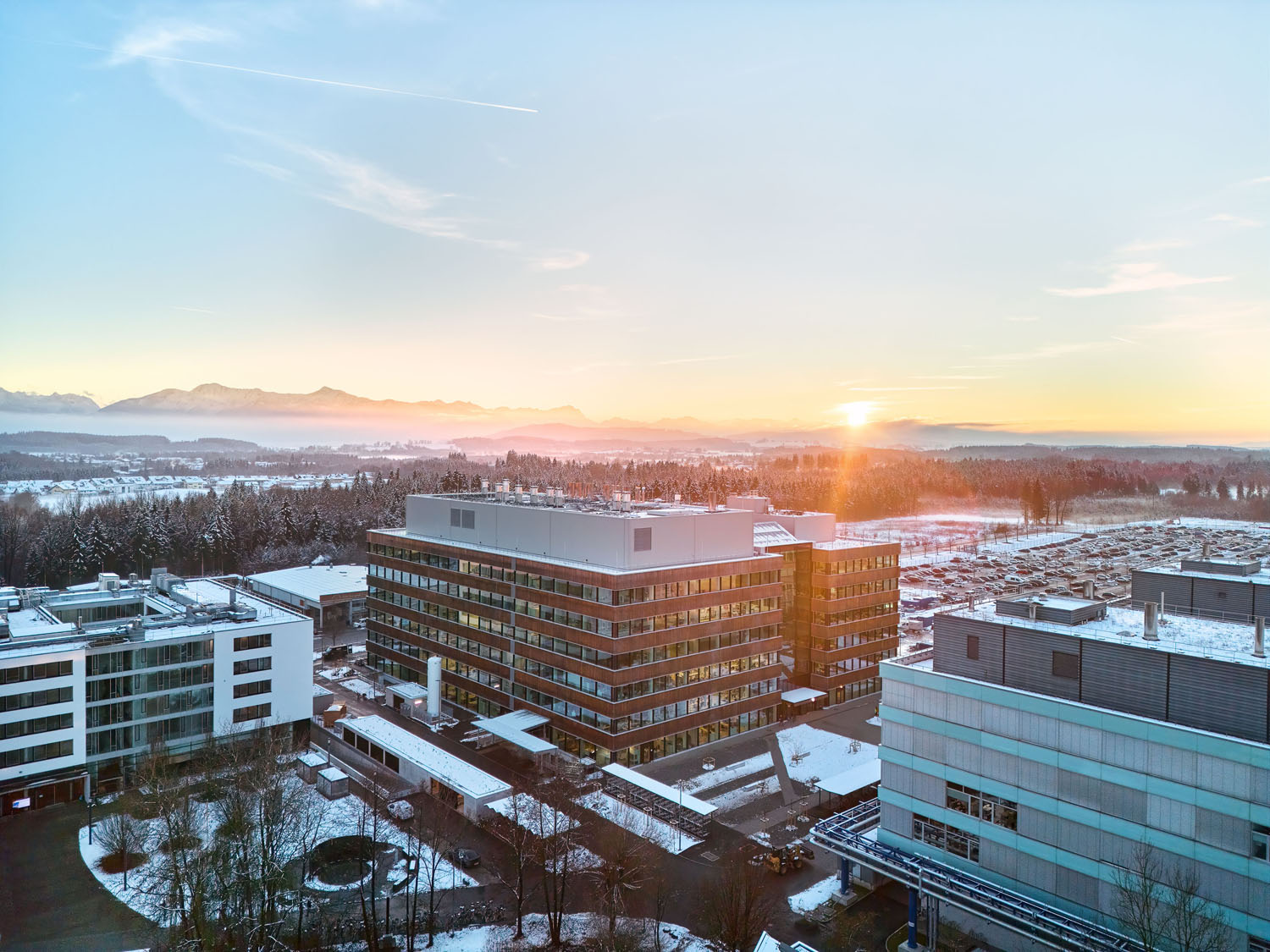
The new Diagnostics Innovation Centre in Penzberg is one of the world’s most state-of-the-art diagnostic development centres. As a lighthouse project for sustainable construction and modern laboratory environments, it serves as the new home for around 1,000 employees. By consolidating 60% of the site’s Diagnostics R&D workforce into a single high-tech hub, the facility overcomes the fragmentation of the past to act as a powerful catalyst for innovation.
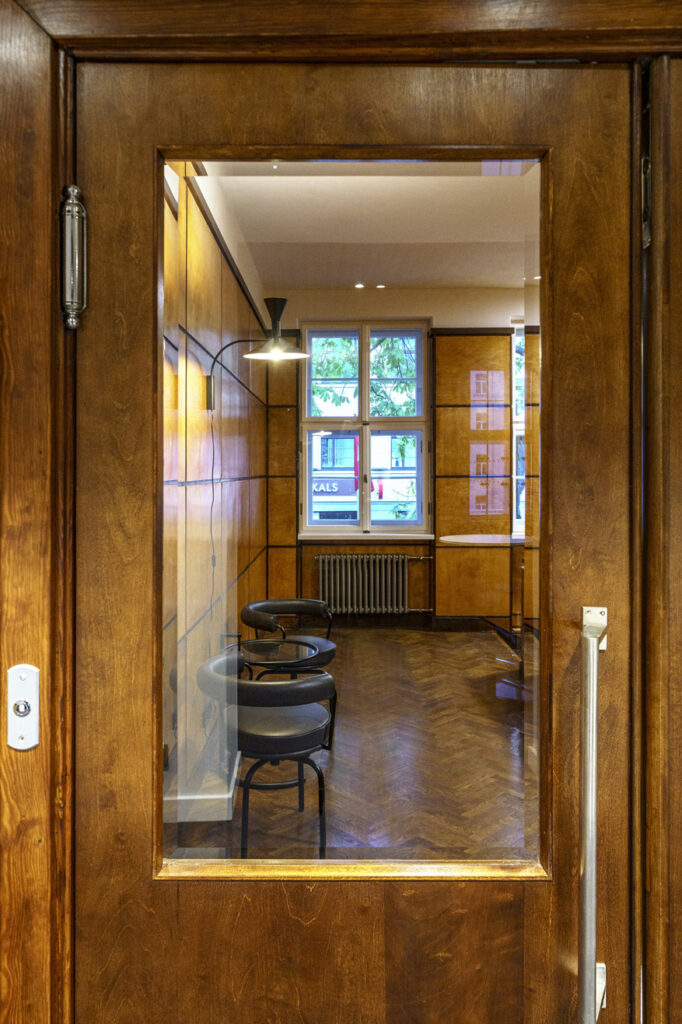
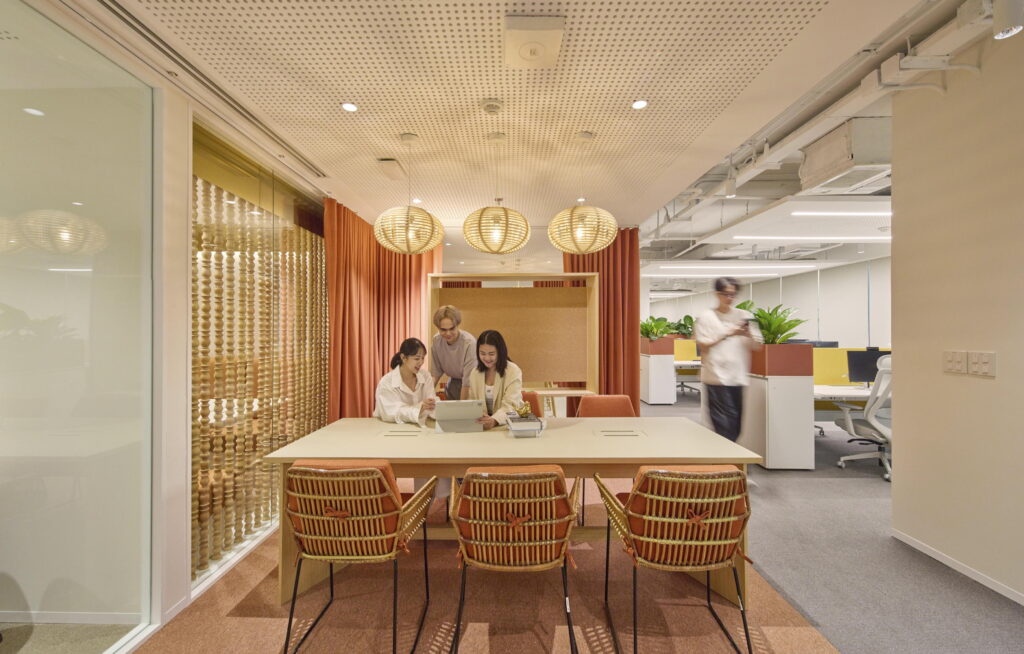
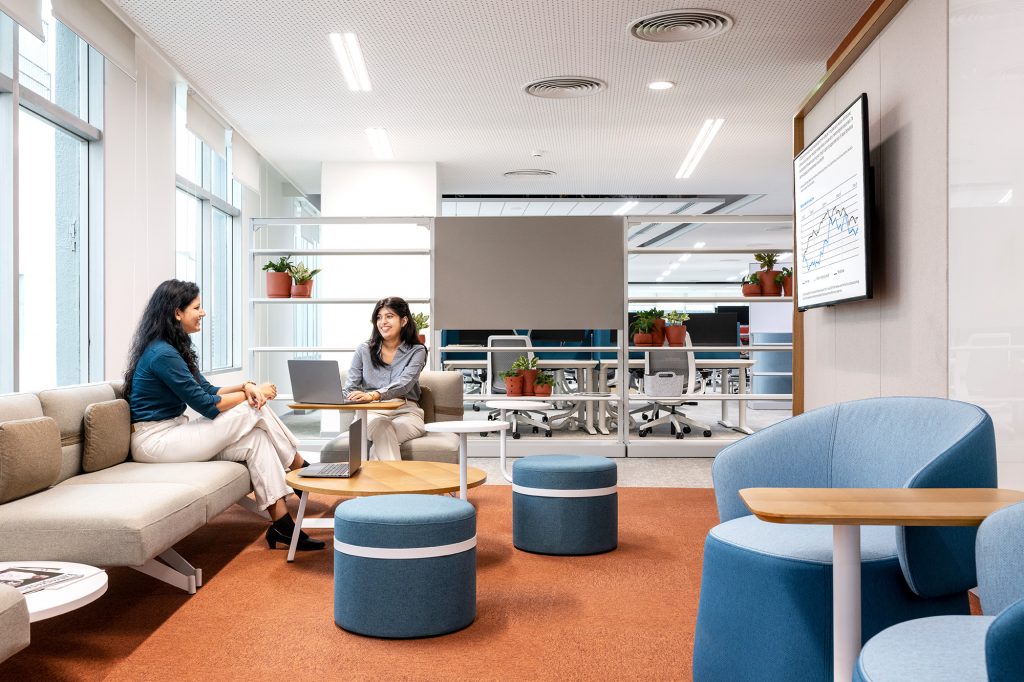
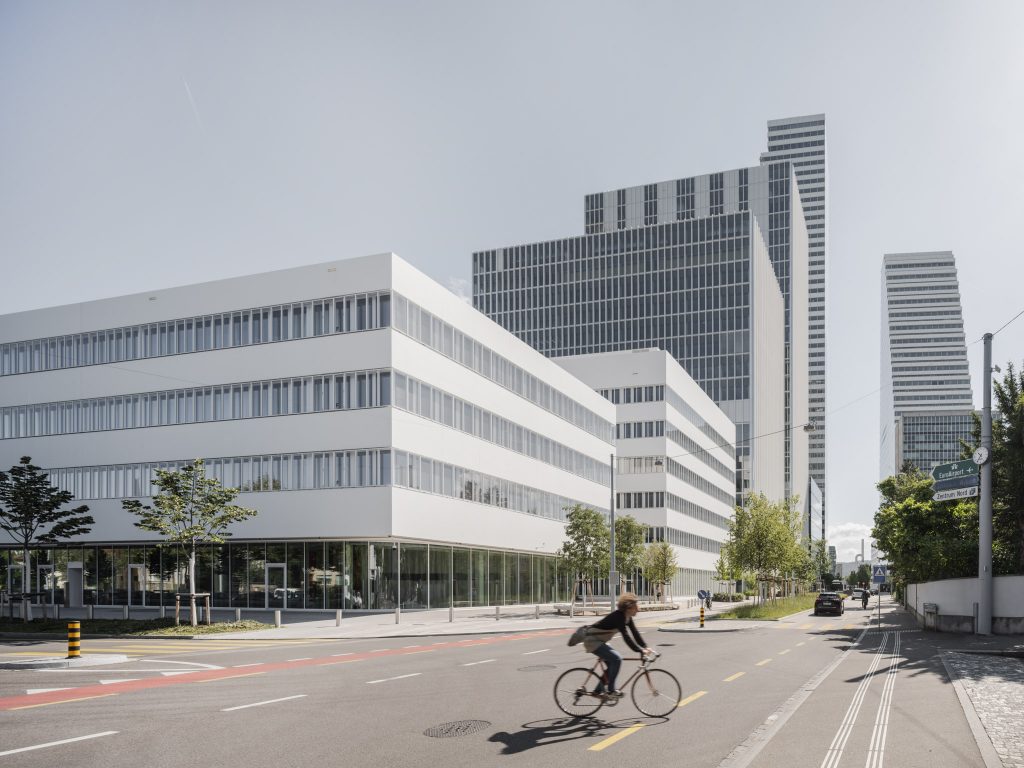
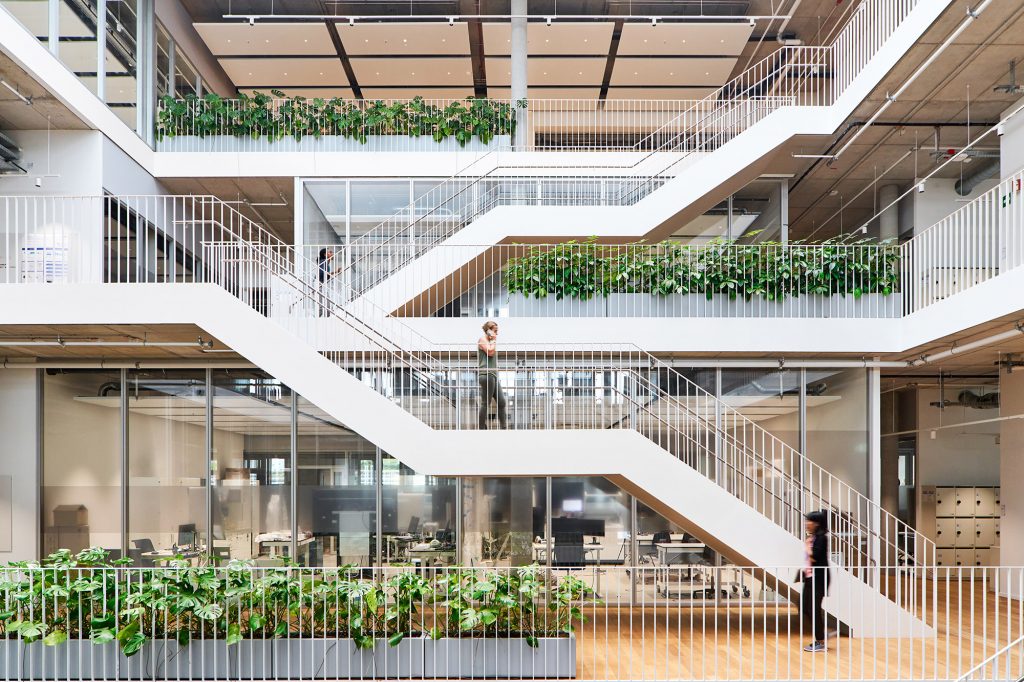
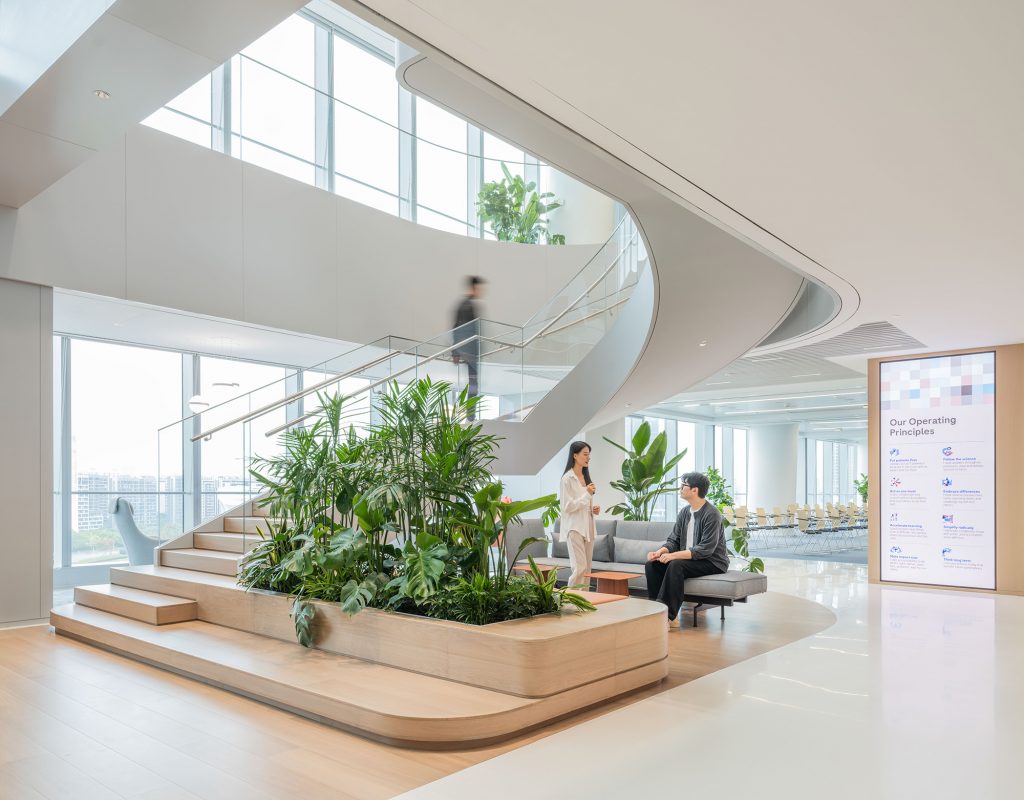
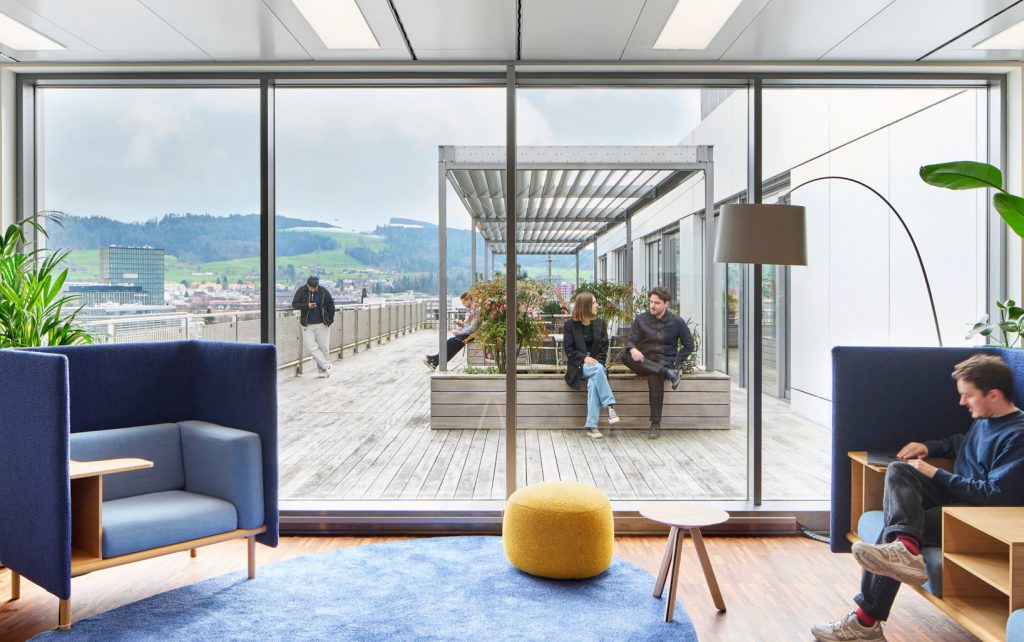
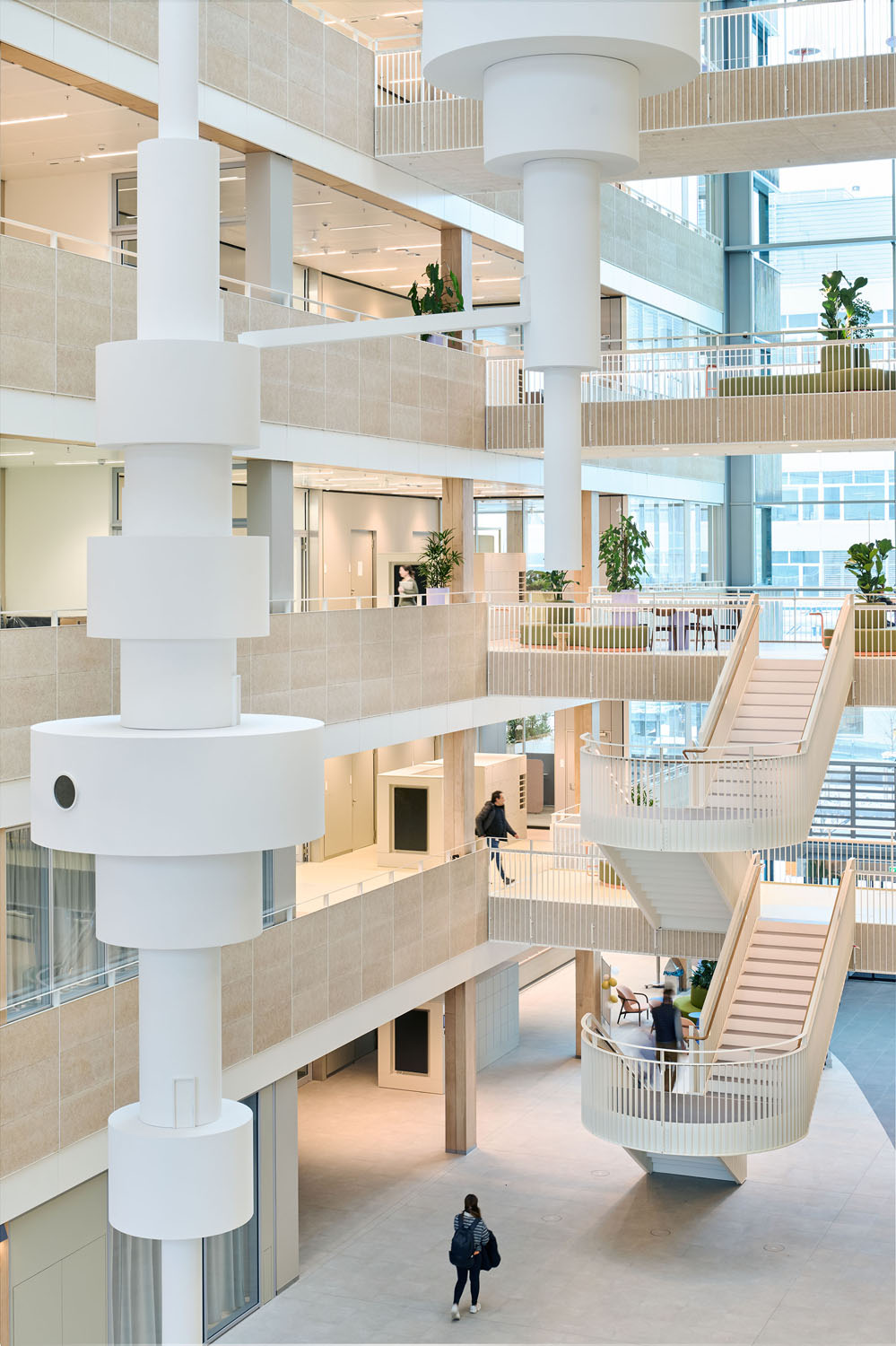
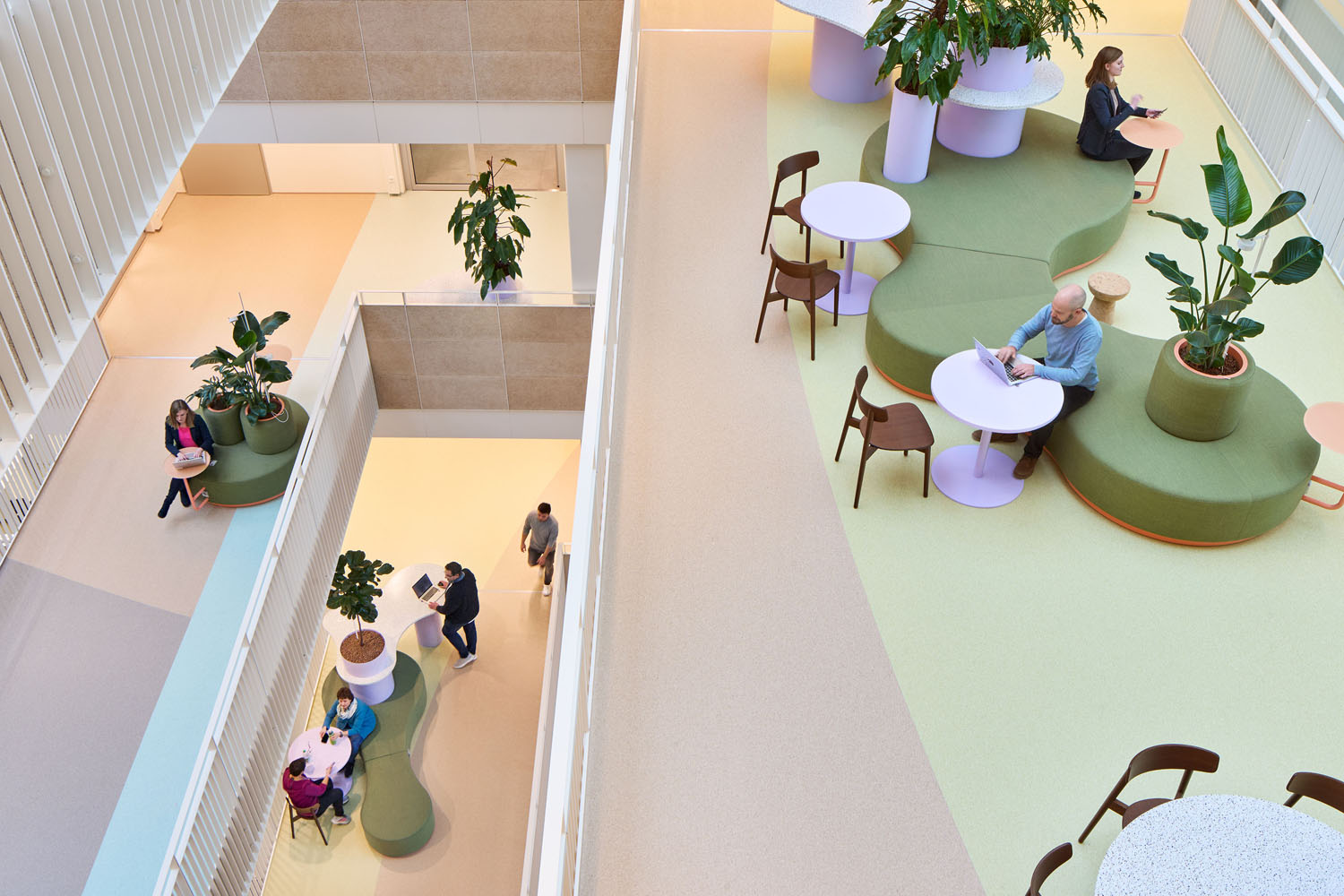
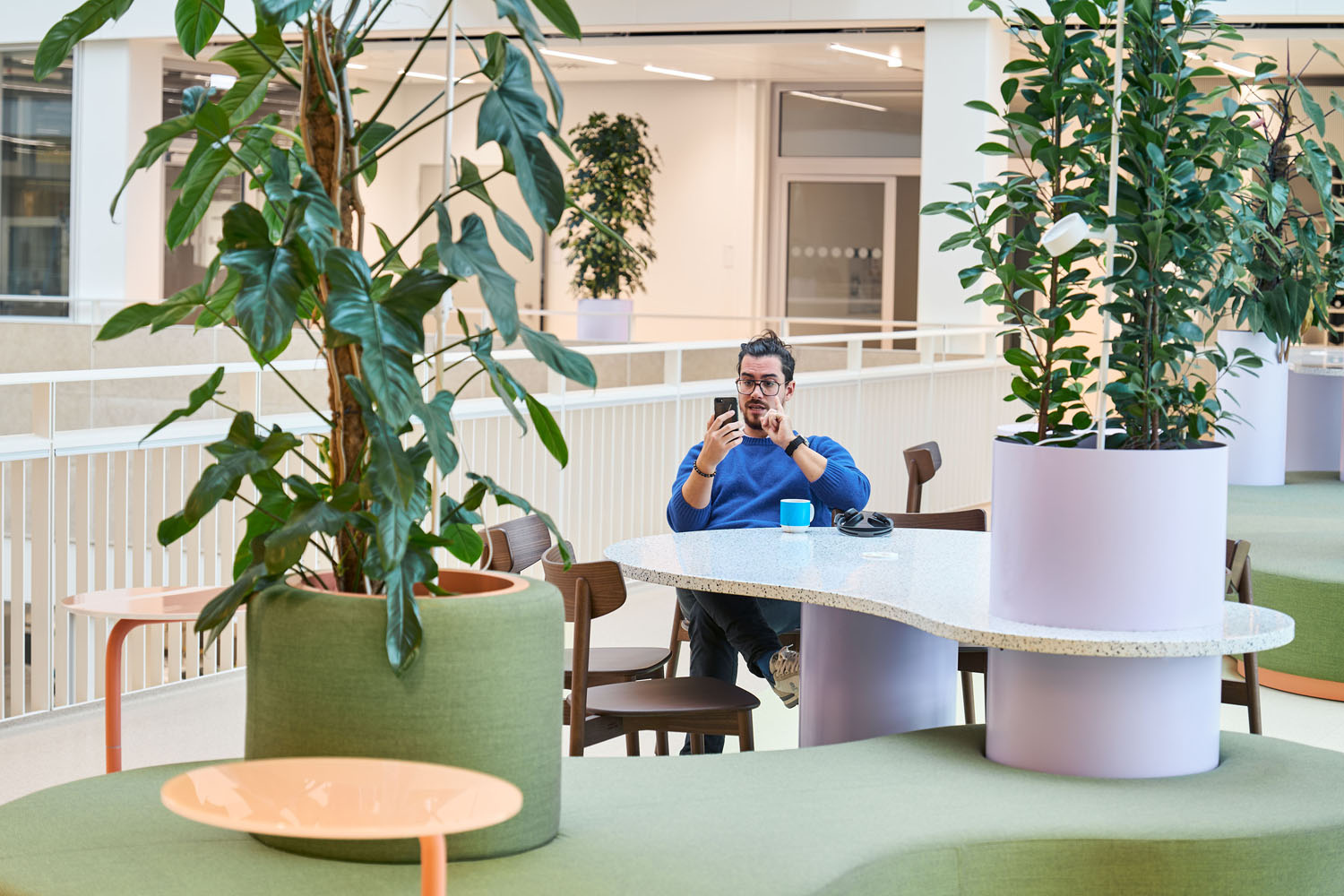
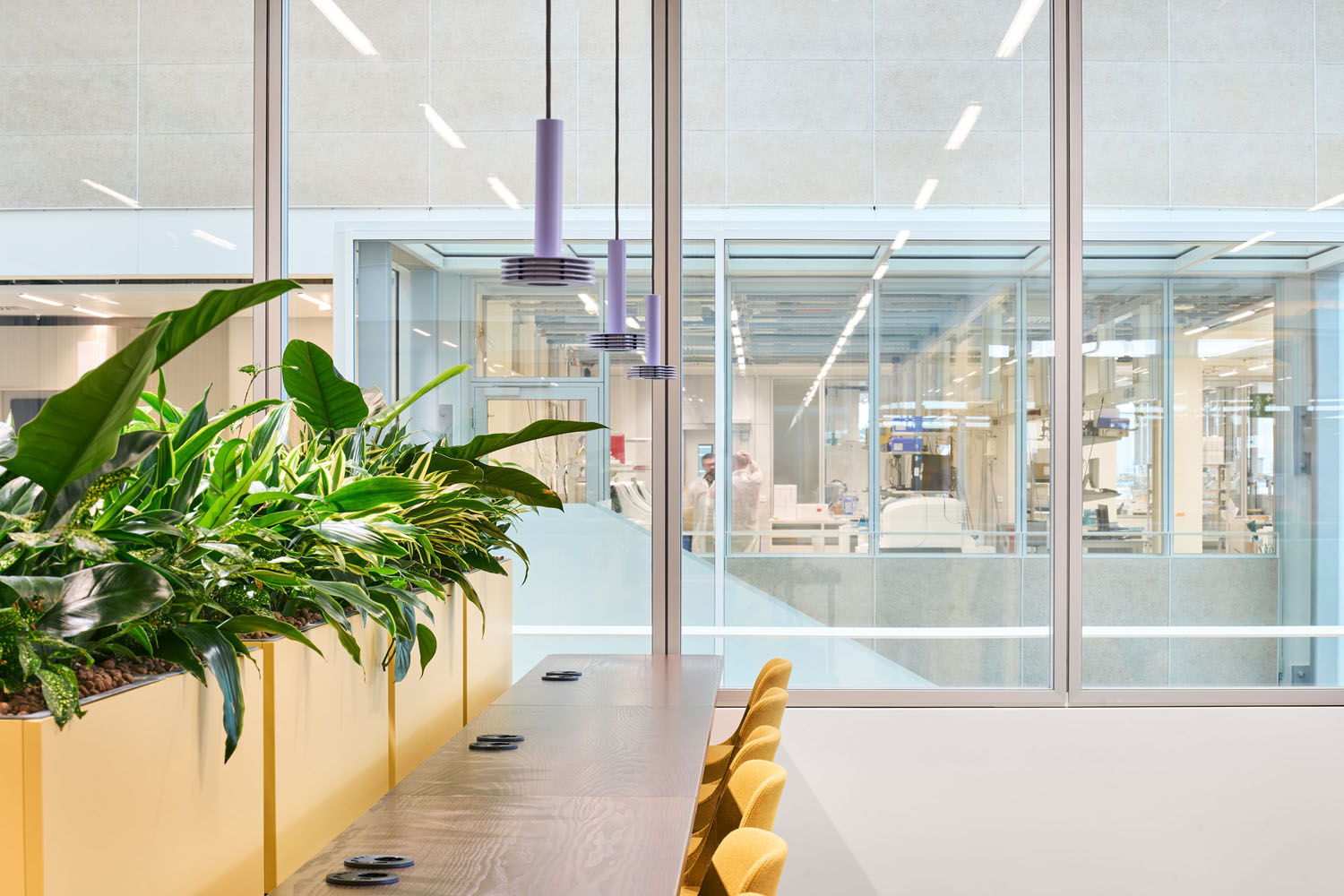
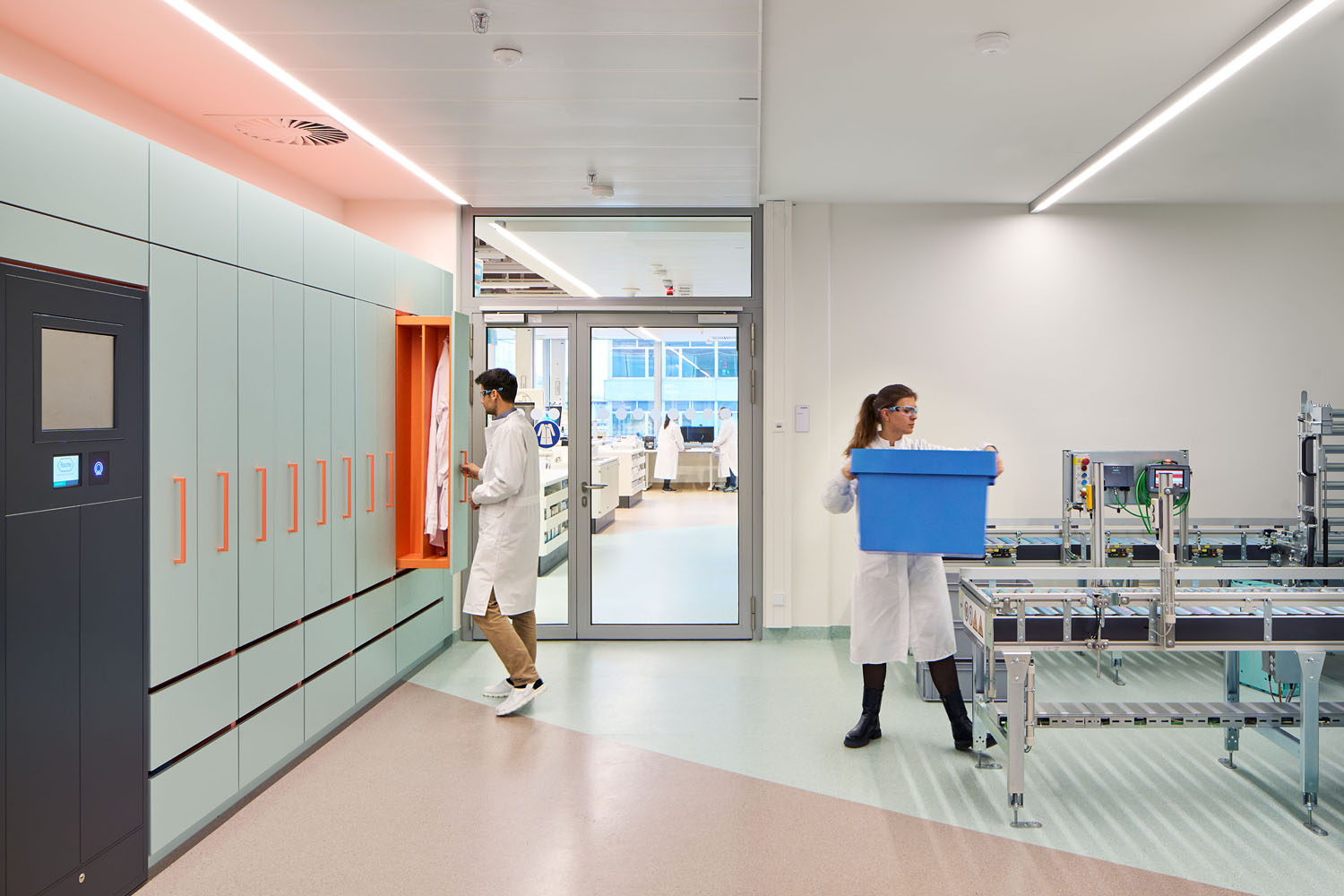
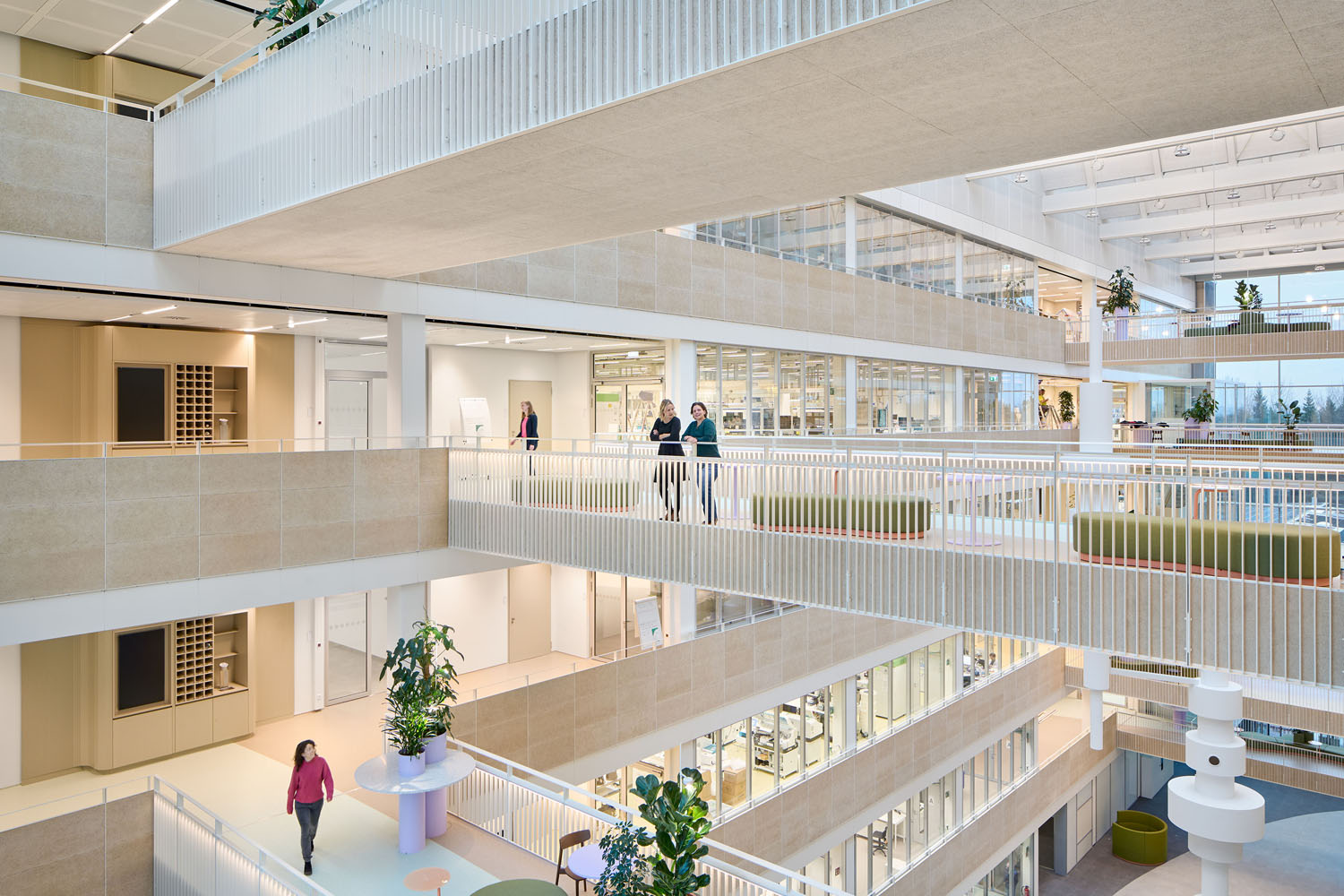
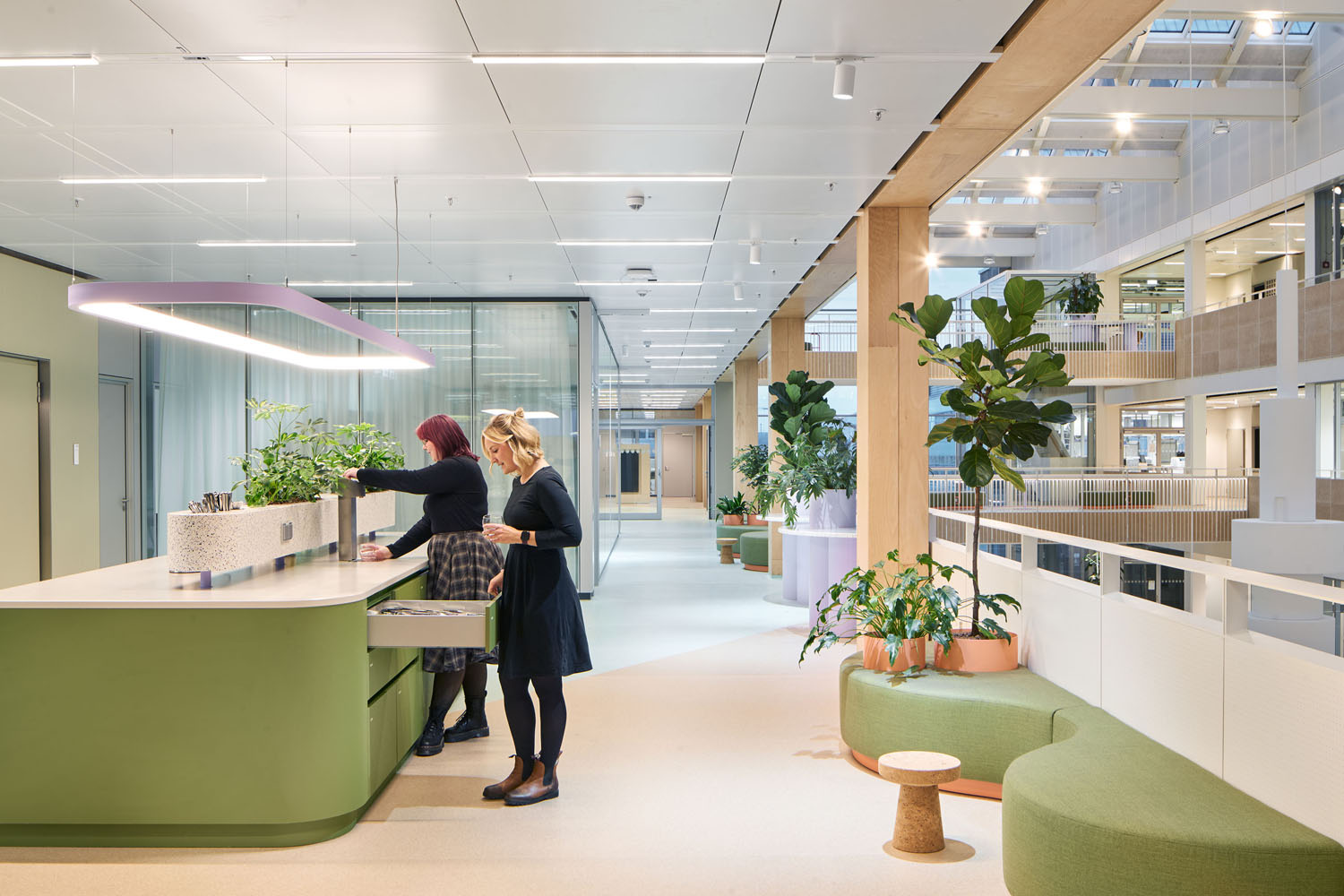
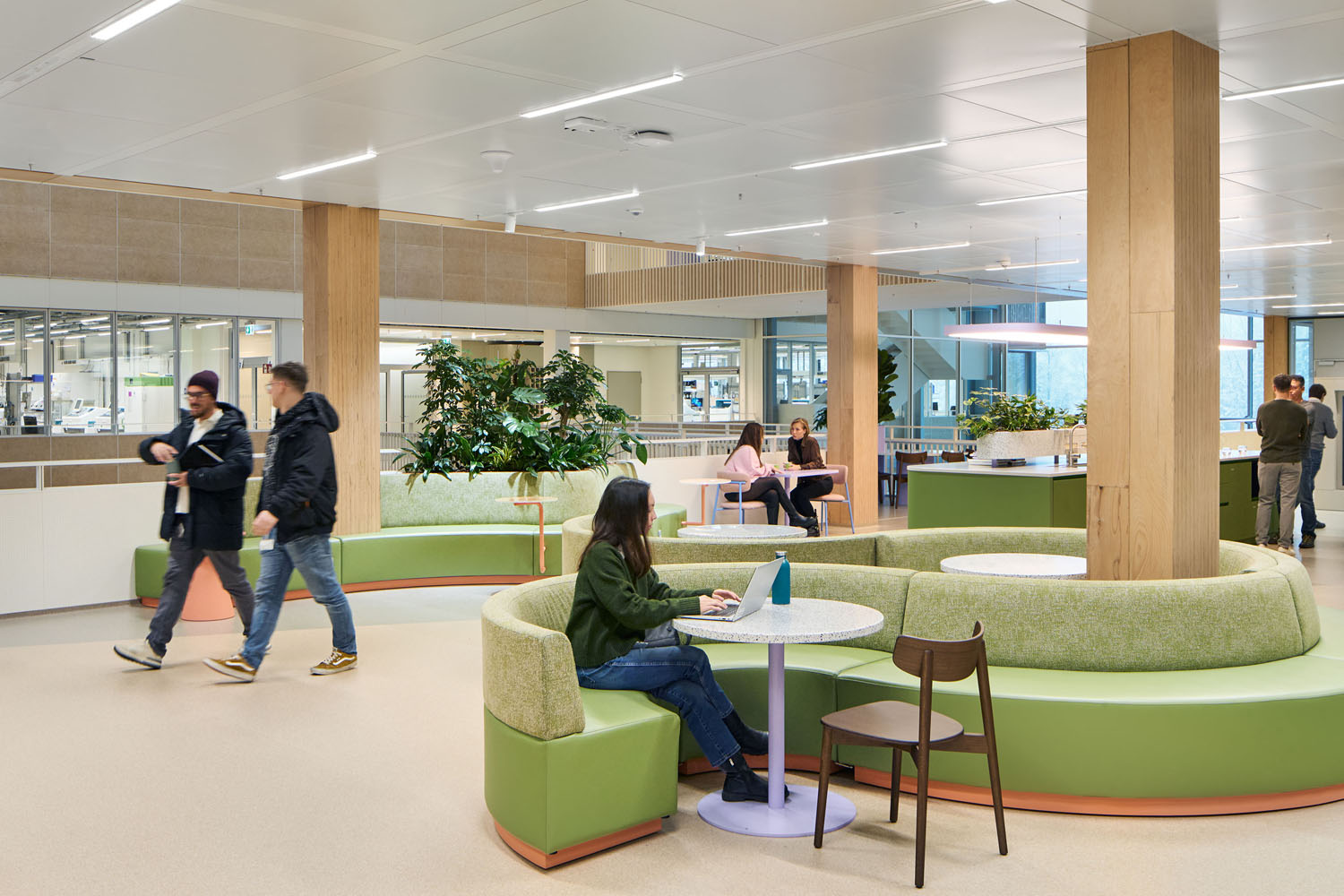
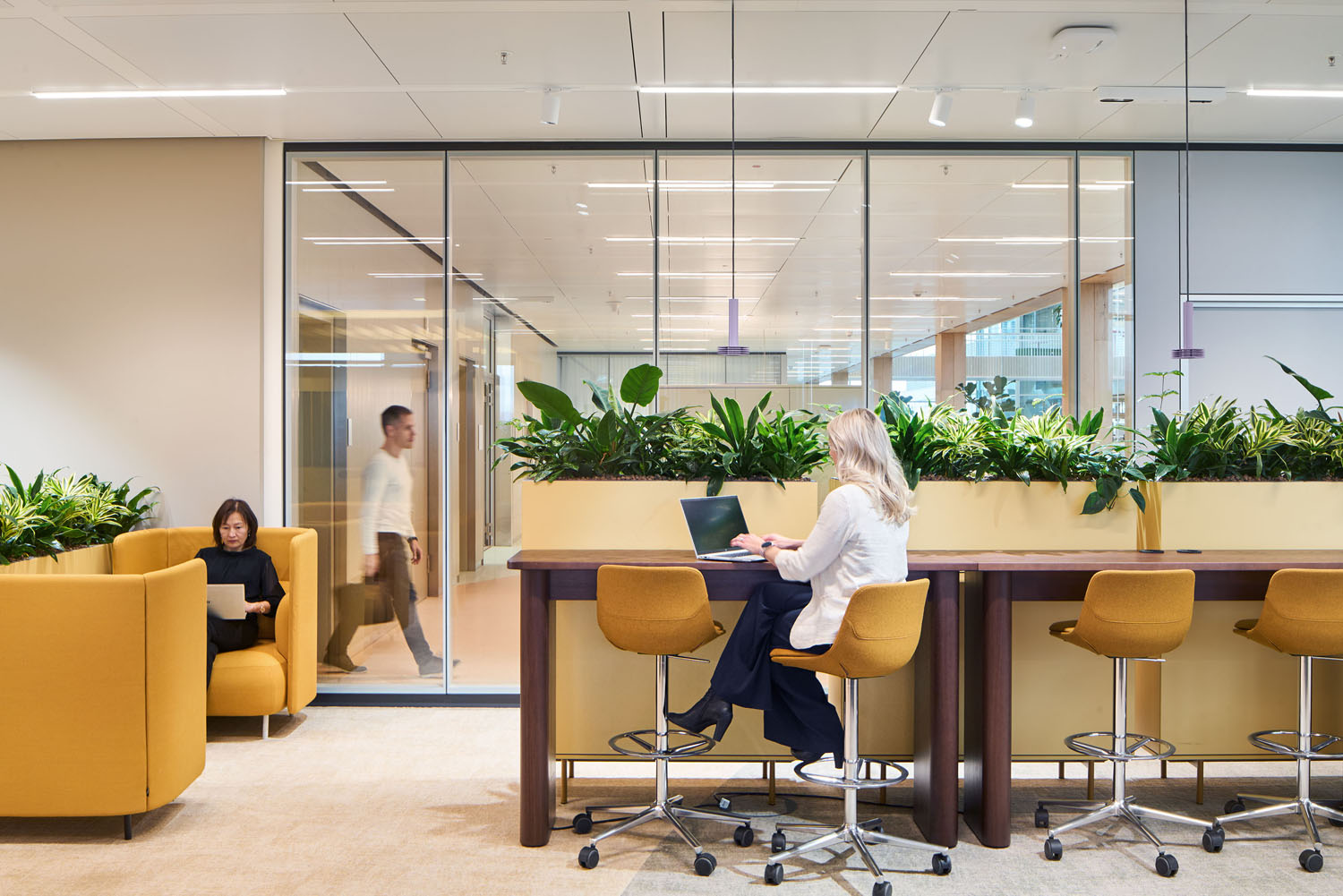
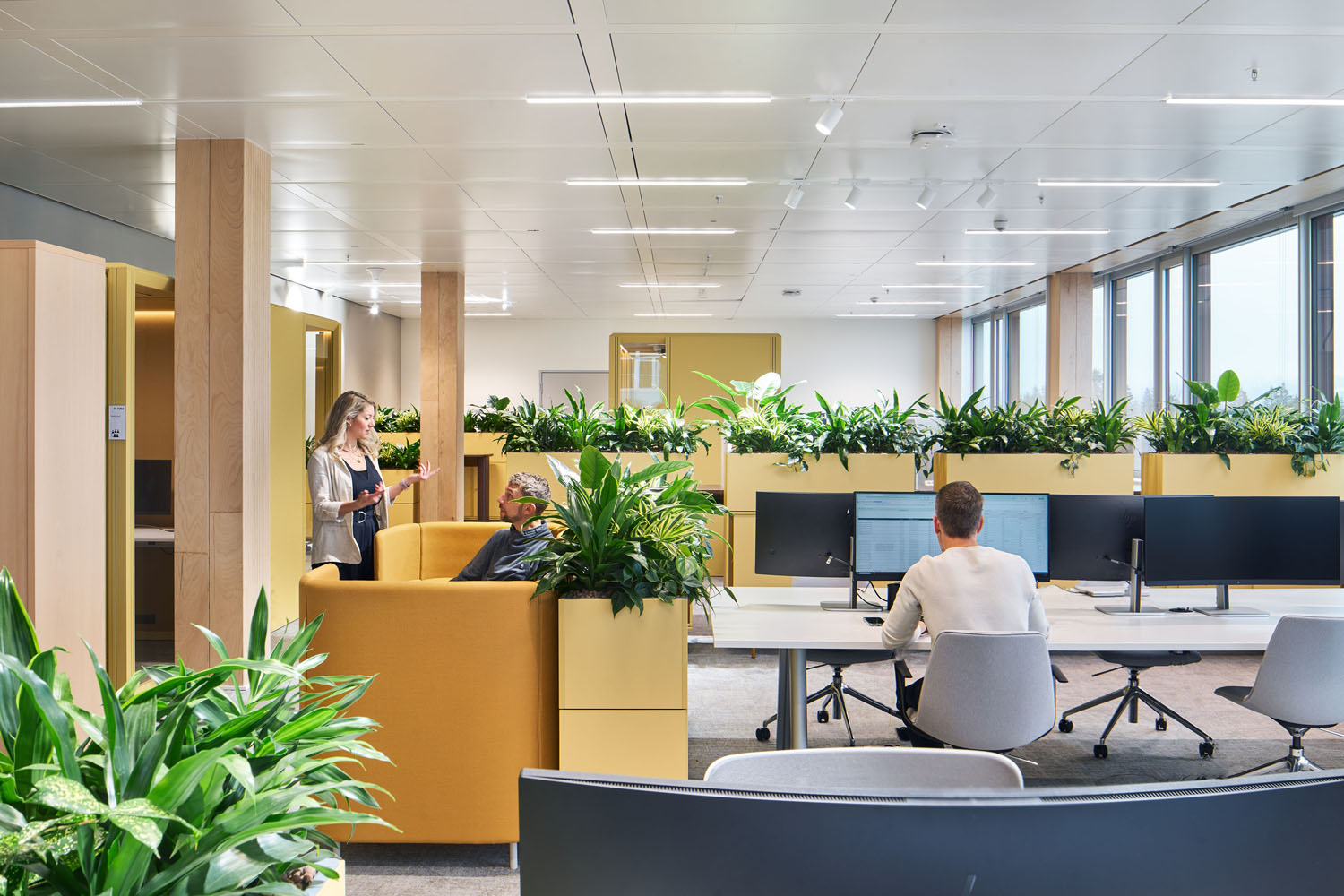
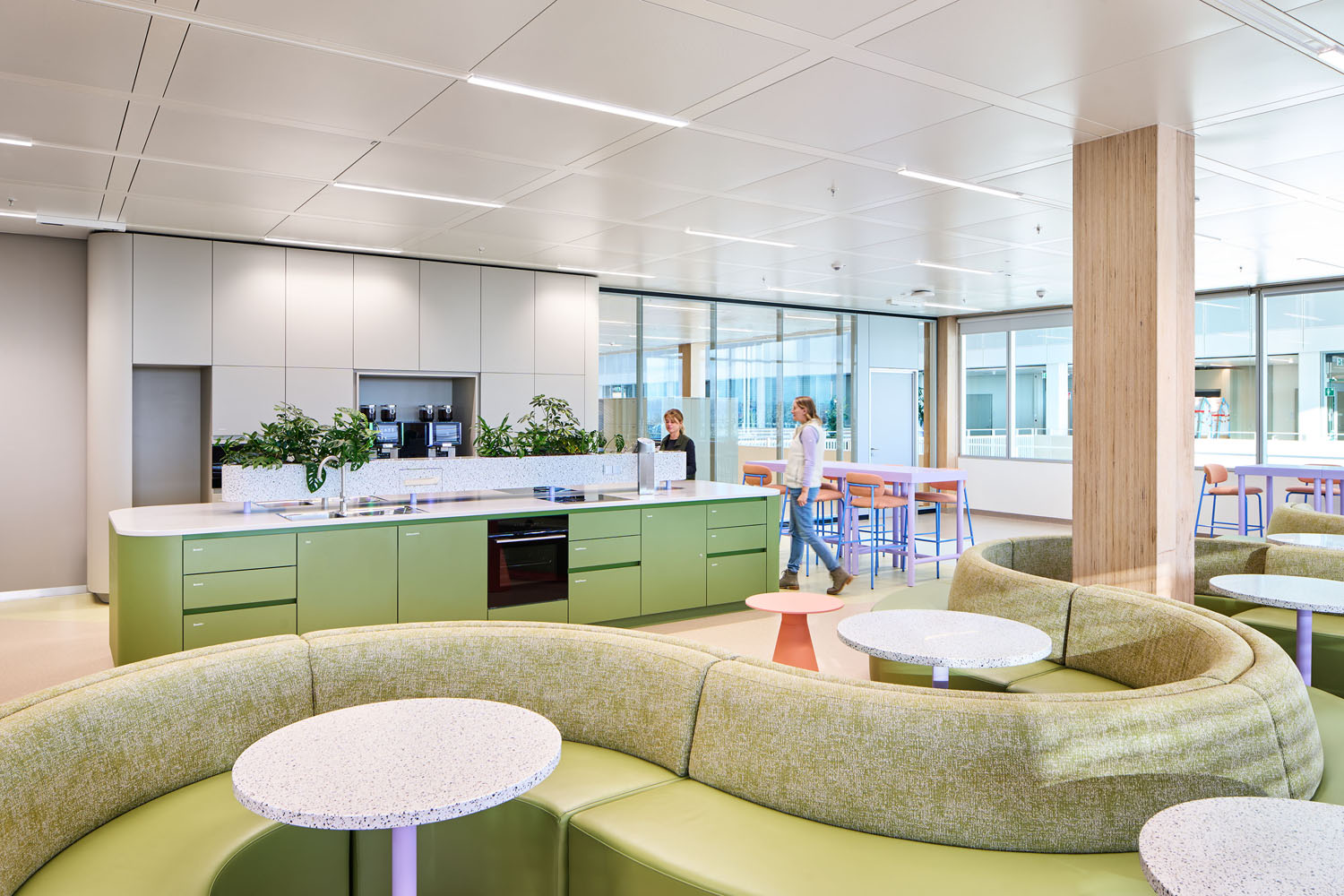
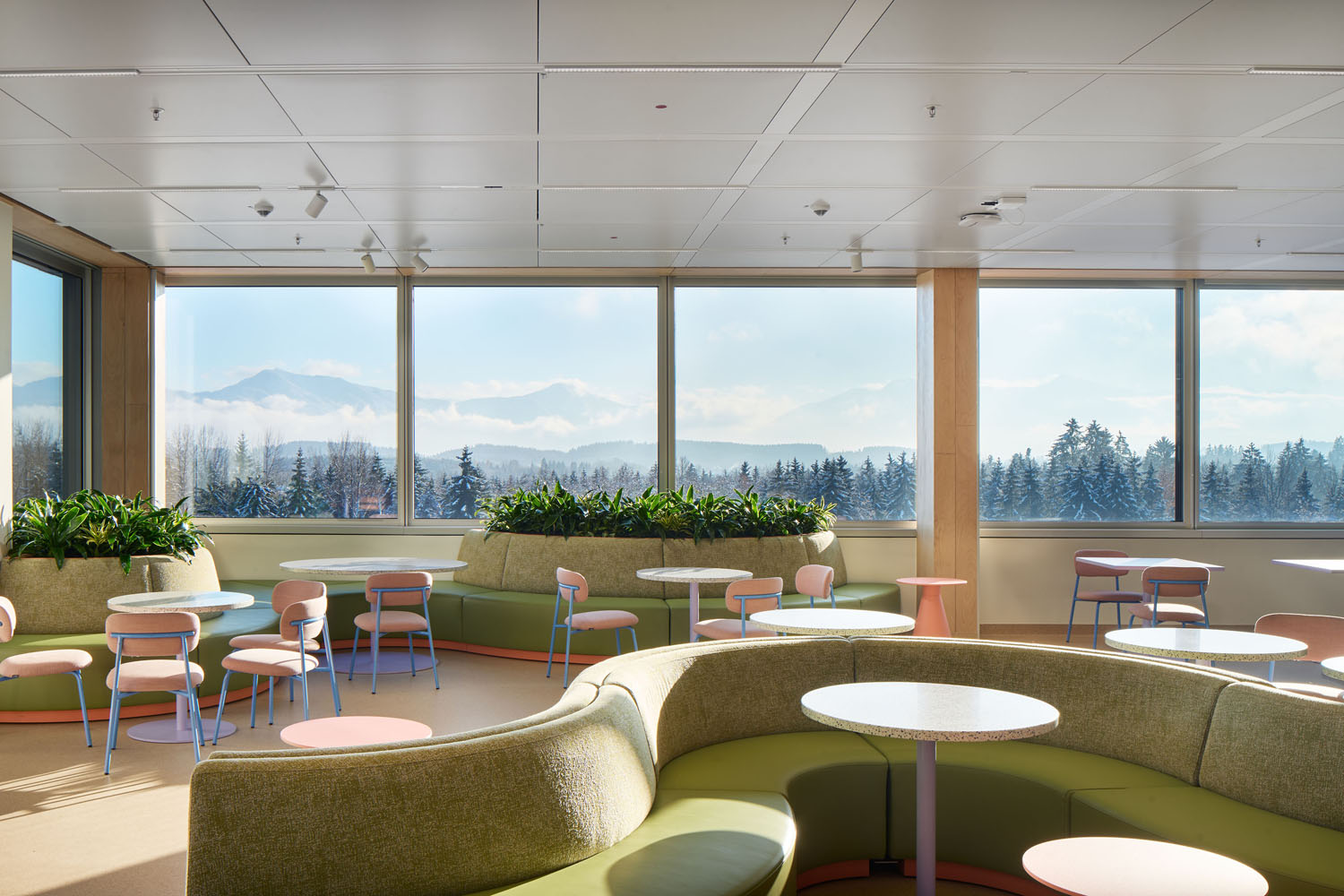
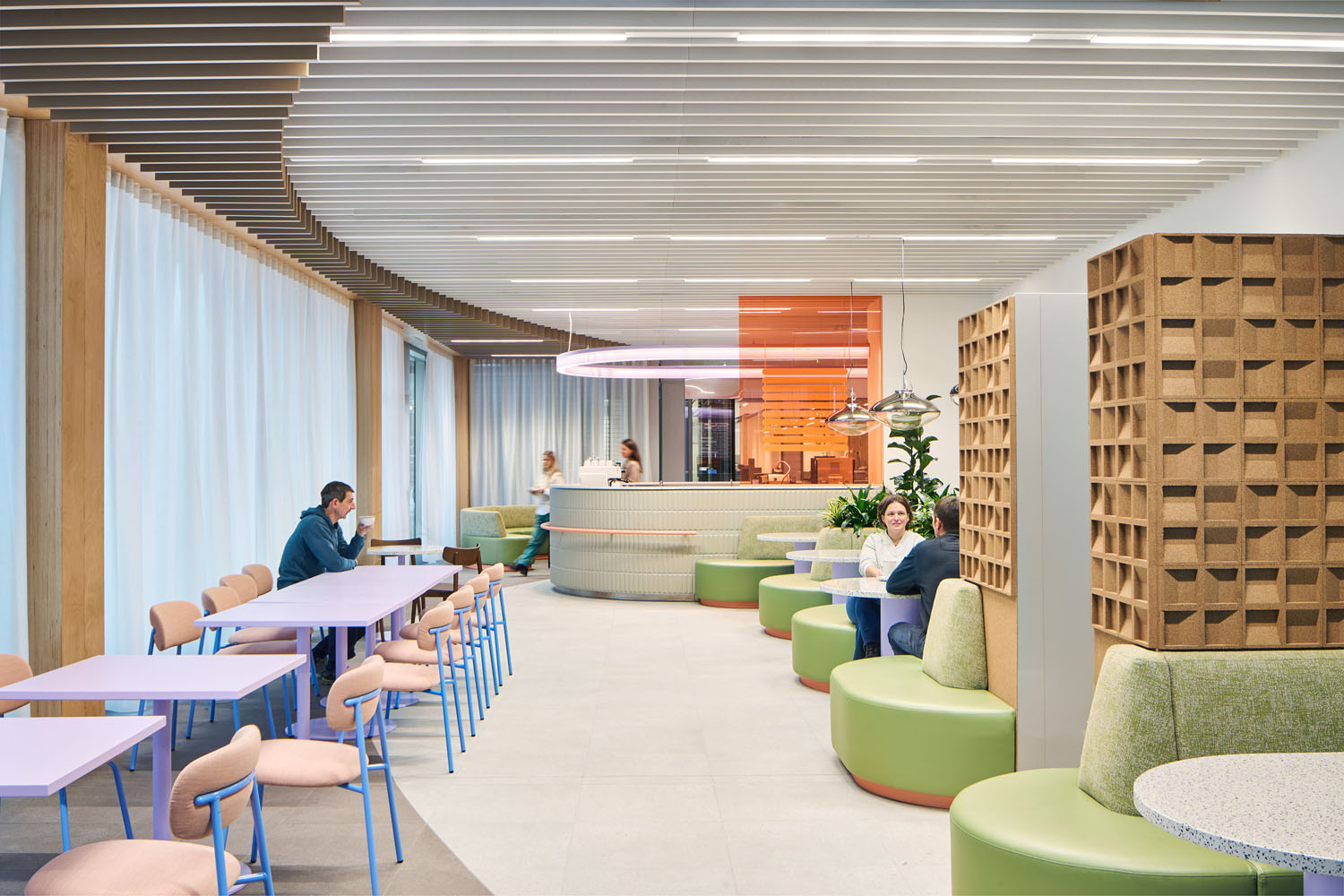
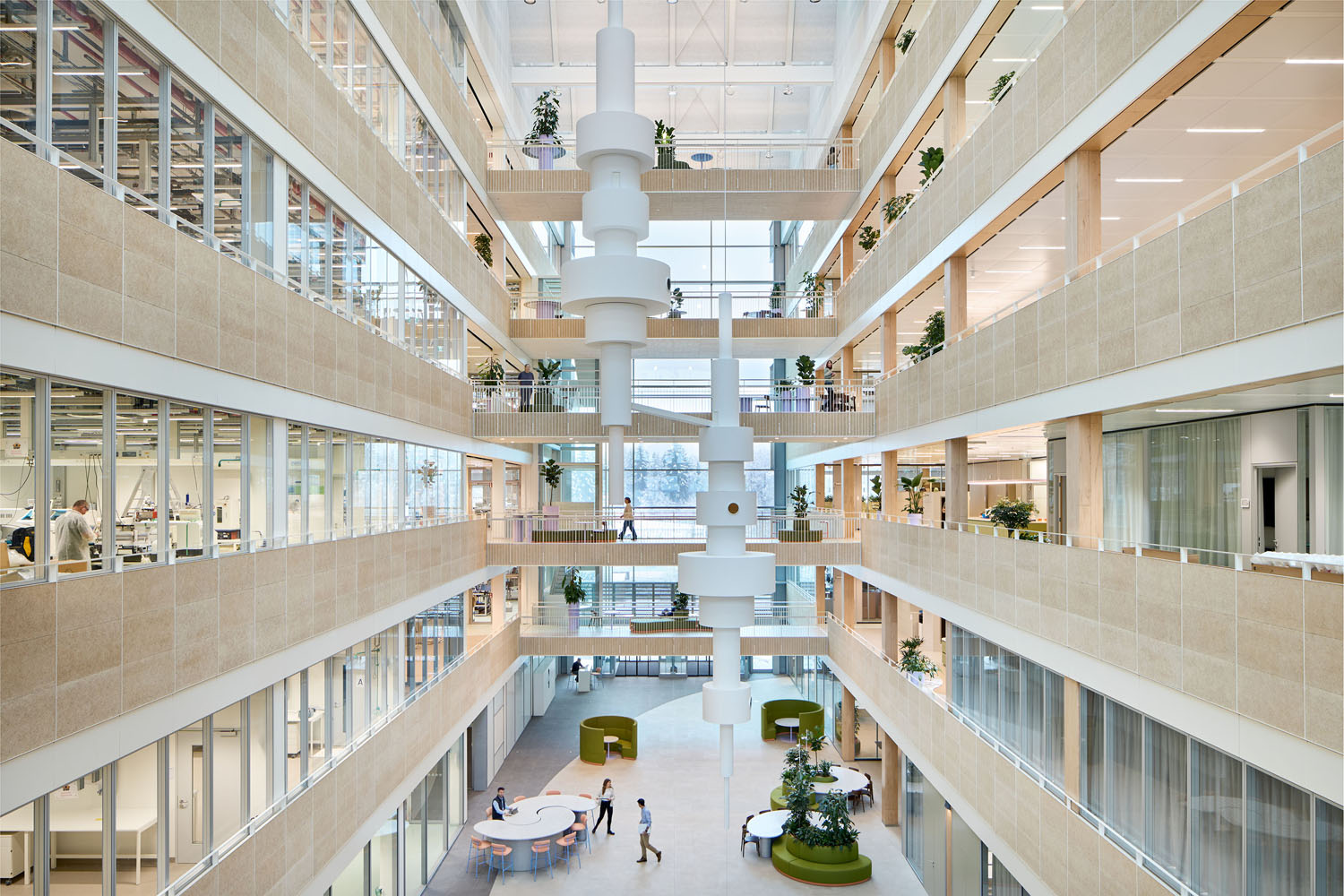
The architectural language is defined by a dual-body structure with a high-tech laboratory block and a modern office wing connected by a light-flooded central atrium. Covering a total floor area of 35,500 m² across seven levels, the facility is a deliberate interplay between two specialized functional areas. While the laboratory section is built in concrete to provide the necessary vibration protection for sensitive instruments, the office wing is realized as one of the region’s largest wood-hybrid constructions. The interior design features a consistent color and material concept that utilizes natural wood, muted tones, and integrated greenery to create a calm atmosphere that supports well-being and creative thinking.
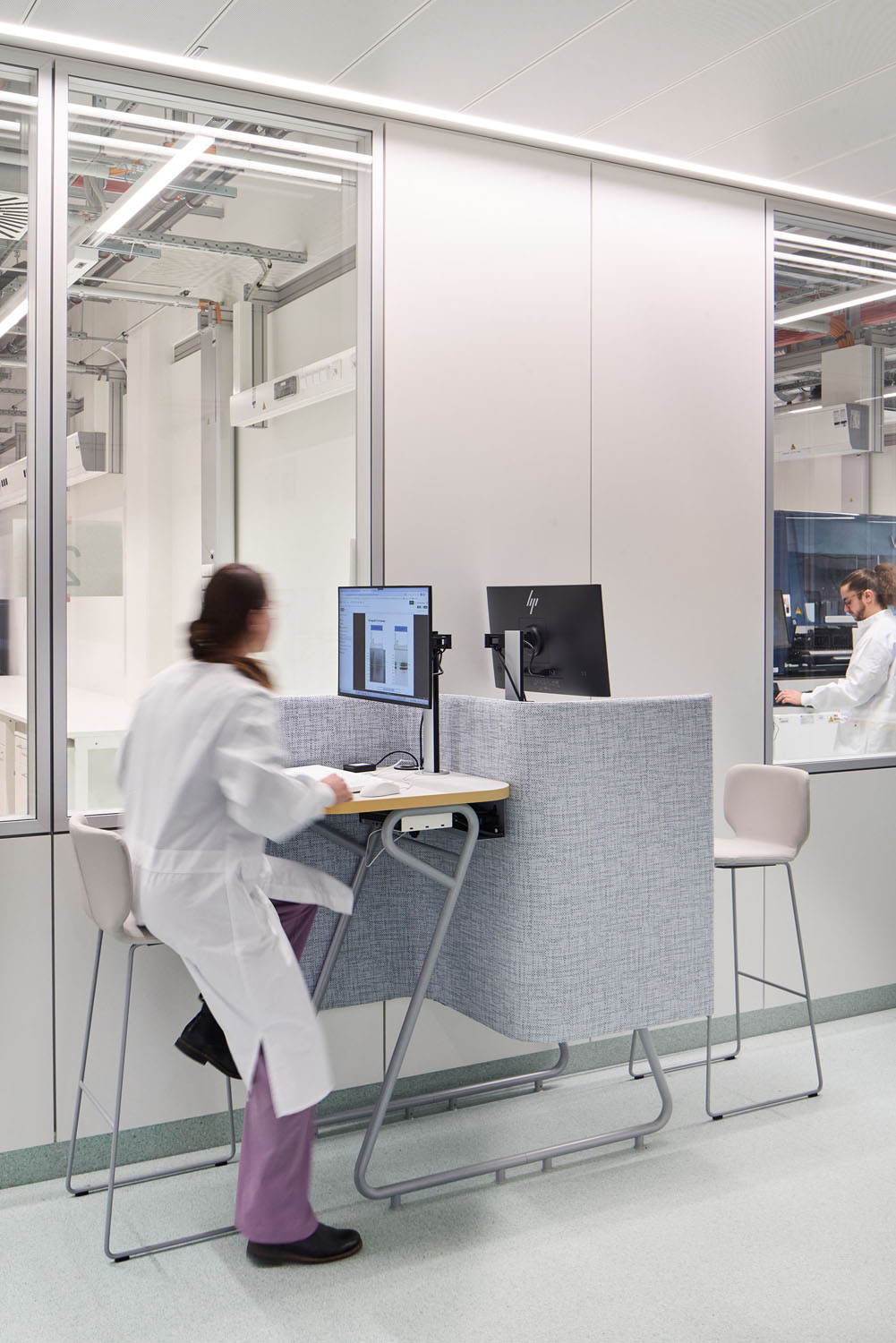
Inside, the center is designed as a place of encounter. The conscious physical separation of the lab and office blocks requires employees to move between the buildings via connecting bridges, which naturally fosters spontaneous interactions. At the base of the atrium, a central cafeteria serves as a social hub for exchange beyond departmental boundaries. While the bridges provide horizontal links, a large-scale sculpture by German-Swiss artist Florian Graf vertically connects all levels of the building. This spatial concept is reinforced by a shift from department-based to activity- and process-based working. In both the offices and the laboratories, workspaces are chosen based on the task at hand rather than hierarchy, effectively breaking down traditional silos.
Digitalization and automation are woven into the very fabric of the structure. The “Cube,” a fully automated central storage system for biological samples, is integrated into the core of the building to allow for a radical optimization of scientific workflows. It is supported by an automated transport system that operates almost invisibly in the background, ensuring seamless logistics and the constant supply and disposal of materials. By merging state-of-the-art robotics with a transparent and flexible spatial layout, the Diagnostics Innovation Centre provides a future-proof stage for the next generation of diagnostic excellence. This forward-looking approach is rounded off by a sustainability concept that includes a CO2-free operation and a 70% reduction in energy requirements compared to previous laboratory generations.
Architect and General Planner: Nickl & Partner, München
Interior Design: Studio Alexander Fehre, Stuttgart
Art installation: Florian Graf, Basel